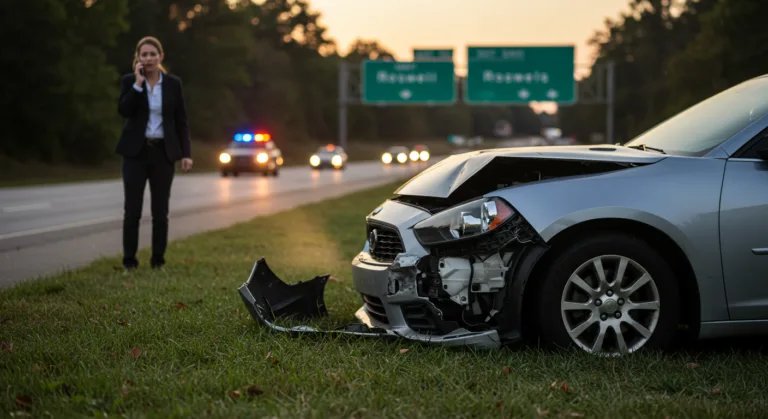
A lot of bad information is floating around about Uber driver pelvic fractures in Phoenix, especially when it comes to mobility loss and what recovery actually looks like. Trying to piece your life back together after a serious injury like that, especially one that happened on the job, is tough enough without the confusion. Too many drivers think they’re stuck with few options, so they lose out on getting the right medical treatment and the compensation they’re owed.
Key Takeaways
- As an injured Uber driver, you can often file a personal injury claim against the driver who hit you. You’re not just stuck with workers’ comp.
- A pelvic fracture means long-term mobility problems, extensive rehab, and sometimes needing to modify your home to get around.
- Under Arizona’s comparative negligence rule, you can get paid even if you’re partly at fault for the crash, though your total award will be reduced.
- You have to document everything, your medical care, lost pay, and pain, right after the accident to build a successful claim.
- An attorney who handles rideshare accidents can cut through the insurance confusion and make sure your rights are protected.
Myth 1: As an Uber Driver, I’m Only Eligible for Uber’s Limited Insurance or Workers’ Compensation
This myth costs injured rideshare drivers more money than any other. People assume that since they were “on the clock,” their only option is Uber’s insurance policy or a workers’ comp system that, as independent contractors, they probably don’t even qualify for. The insurance situation is much more complicated than that. Yes, Uber provides some coverage (usually third-party liability and uninsured/underinsured motorist protection that changes depending on the “period” of the ride), but that doesn’t stop you from going after the at-fault driver’s personal insurance if someone else caused the wreck. Let’s say you’re an Uber driver waiting for a fare in the Phoenix Sky Harbor International Airport cell phone lot and someone texting slams into you from behind. That distracted driver’s liability insurance is your primary source for compensation. Uber’s policy might come in as secondary coverage, or it could apply if the other driver has no insurance or not enough. Plus, Arizona law doesn’t treat Uber drivers as employees for workers’ comp, so that’s a tough road to go down. Juggling your own auto insurance, Uber’s policy, and the at-fault driver’s coverage determines who pays for what, and I’ve seen tons of cases where drivers took a quick, low settlement from Uber’s carrier, only to find out they had a much bigger claim against the person who was actually negligent.
Myth 2: Pelvic Fractures Heal Completely with Rest, and Mobility Loss is Temporary
Rest is part of it, sure, but anyone who suggests a pelvic fracture heals completely with just rest is giving you dangerous advice. These are serious injuries, usually from the kind of high-impact crashes you see on Phoenix freeways like I-10 or the Loop 101. The pelvis is a complex ring of bones that holds up your spine and connects to your legs. It’s central to walking, standing, and just sitting upright. Recovery means physical therapy, and a lot of it, often for months, sometimes for over a year. A study in the Journal of Orthopaedic Trauma (https://journals.lww.com/jorthotrauma/Abstract/2023/07000/Long_Term_Functional_Outcomes_Following_Pelvic.8.aspx) found many patients still deal with pain, problems walking, and reduced motion years later. For an Uber driver, whose entire job is sitting for hours, working pedals, and maybe helping with luggage, this kind of long-term mobility loss can end a career. Your ability to walk, handle daily tasks, drive safely, and live independently is on the line. Complications like nerve damage, chronic pain, and post-traumatic arthritis in the hips are real risks. Believing you’ll be back to normal in a few weeks completely underestimates how bad this injury is.
Myth 3: You Can’t Sue If You Were Partially at Fault for the Accident
Arizona uses a system called pure comparative negligence, which is laid out in Arizona Revised Statutes § 12-2505 (https://www.azleg.gov/ars/12/02505.htm). What this means in plain English is that being partially responsible for the crash that gave you a pelvic fracture doesn’t prevent you from recovering damages. Instead, the court reduces the award by whatever percentage of fault is assigned to you. For instance, if a jury decides your total damages are $500,000 but finds you were 20% to blame for the collision at a busy intersection like Camelback Road and 7th Street, your award gets cut by that 20%, and you’d receive $400,000. So many people get this wrong and think any fault on their part kills their case. Insurance adjusters know this and will absolutely use it to their advantage, pushing for a tiny settlement or denying a claim by blowing a driver’s tiny mistake way out of proportion. Remember that fault is almost always up for debate and can be fought. Things like traffic cam footage, witness accounts, and accident reconstruction reports can completely change the liability picture. Don’t let an insurer’s first take on fault scare you off from getting the money you’re owed.
Myth 4: Your Personal Auto Insurance Will Cover Everything If Uber’s Policy Doesn’t
Lots of drivers make this expensive mistake, thinking their personal auto insurance is a safety net if Uber’s coverage falls short. The problem is, nearly every personal auto policy has a “commercial use” exclusion. If you’re using your car to make money, like driving for Uber, that policy likely won’t cover a thing if you get into a wreck while working. Because of this commercial use exclusion, you have to know how Uber’s insurance “periods” work. Period 0: app is off. Period 1: app is on, you’re waiting for a ride request. Period 2: you’ve accepted a request and are en route to the passenger. Period 3: the passenger is in your car. Uber’s coverage amounts change drastically between these periods. In Period 1, for example, Uber’s liability limits are much lower than in Periods 2 and 3, when coverage often goes up to $1 million. A crash in Period 1 could leave a driver with huge out-of-pocket medical bills and repair costs if their personal policy denies the claim. Take a hard look at your own policy and Uber’s latest insurance certificate.
Myth 5: You Have Plenty of Time to File a Claim for Your Pelvic Fracture
Arizona gives you two years to file a personal injury claim under A.R.S. § 12-542 (https://www.azleg.gov/ars/12/00542.htm), but waiting is a huge mistake. That clock starts the day of the accident. Two years feels like a long time, but evidence has a short shelf life. Witnesses forget details, the crash scene gets altered, and paperwork gets lost. Even more important, putting off medical care hurts your health and your case. Insurance companies love to see a big gap between the accident and the first visit to a doctor, they’ll argue your injuries must have come from something else. For something as severe as a pelvic fracture, you need to get to a hospital like Banner University Medical Center Phoenix or St. Joseph’s Hospital and Medical Center immediately. Every doctor’s visit, procedure, and prescription builds a paper trail that proves your injuries. Don’t wait. Acting fast preserves evidence and makes it much harder for the insurance company to fight your claim.
Types of Compensation for a Pelvic Fracture
You can seek money for all your medical bills (both what you’ve already paid and what you’ll need in the future), lost income from being out of work, your reduced ability to earn money long-term, and property damage to your car. You can also get compensated for pain and suffering, emotional distress, and loss of enjoyment of life. With a pelvic fracture, the future medical costs for things like long-term physical therapy or assistive devices can be huge.
Getting Hit by an Uninsured Driver
When you’re actively on a trip for Uber (Periods 2 or 3) and you’re hit by someone with no insurance or too little insurance, Uber’s uninsured/underinsured motorist (UM/UIM) coverage typically provides up to $1 million. If you’re just in Period 1 (app on, waiting for a ping), that coverage might be lower or have other conditions. You have to check the policy details and Uber’s terms that were active when the accident happened.
Proving Mobility Loss
To prove you’ve lost mobility, you need a mountain of paperwork. This includes all your medical records, especially diagnostic images like X-rays and CT scans, along with detailed notes from your physical therapist about your limitations. Reports from your orthopedic surgeon or physiatrist are key, and sometimes a vocational expert’s assessment showing you can’t do your job anymore is needed. Keeping a personal journal about your daily struggles and getting statements from friends or family who see what you’re going through can also really help.
Can I Drive for Uber Again?
Returning to rideshare driving is a big maybe. It all comes down to how bad the fracture was, how well you recover, and whether your doctor clears you to safely handle the job. The reality is that many people with these injuries have chronic pain or mobility issues that make sitting for long stretches or making the sudden movements required for driving impossible.
Accepting an Insurance Settlement
Never, ever accept the first settlement offer from an insurance company without talking to a personal injury attorney. Those initial offers are almost always lowball numbers that don’t come close to covering your long-term medical care, lost income, and suffering, particularly for an injury as bad as a pelvic fracture. The second you accept that money, you sign away your rights to ask for anything more, ever.