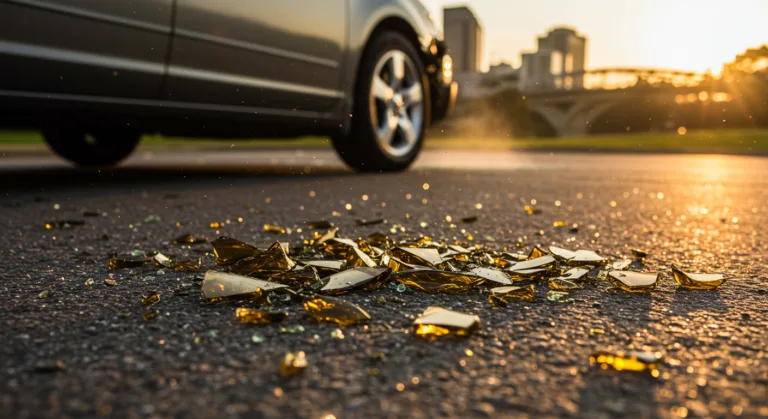
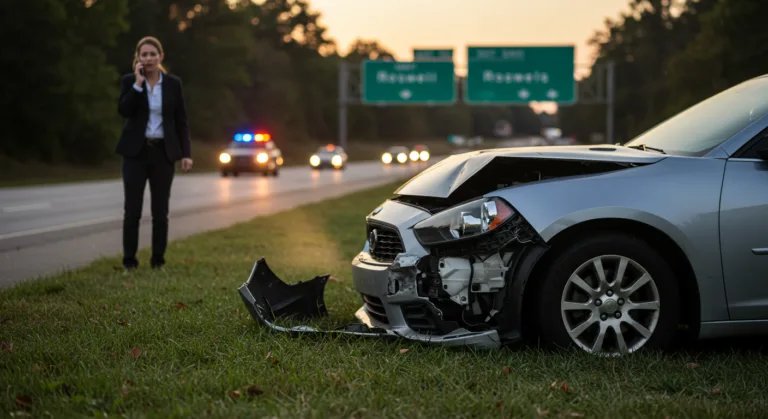
Michael, a dedicated Uber driver in Phoenix, had just dropped off a passenger near the busy intersection of 7th Street and Camelback Road when his day went completely sideways. He was driving through a green light when a speeding car blew the red on Camelback and T-boned his sedan. The impact was devastating. Michael was left dazed, his car was a wreck, and he was suddenly facing serious injuries and a future he couldn’t plan for. If you’re in a similar spot, knowing how to navigate the mess of an Uber driver accident Phoenix involving a T-bone crash and the fight for a rideshare settlement is everything.
Key Takeaways
- Uber’s insurance policies are your main source for compensation after a wreck, specifically Coverage A ($1 million for uninsured/underinsured motorists), Coverage B (contingent collision), and Coverage C (third-party liability).
- Per Arizona Revised Statutes (A.R.S.) Section 28-2512, you must immediately report any accident with injuries or major property damage to the police.
- All your medical documentation, from the first ER visit and X-rays to ongoing physical therapy notes, is the evidence that substantiates your injury claim and drives up its value.
- Settling a rideshare claim means you’re often fighting with multiple insurance companies at the same time: Uber’s, the other driver’s, and sometimes your own.
- For a severe T-bone collision with significant injuries, payouts often range from $100,000 to over $500,000, depending entirely on the total medical bills, lost income, and pain and suffering.
The moments after Michael’s crash were a blur of sirens and flashing lights. Paramedics got him stable on-site and then rushed him to Banner, University Medical Center Phoenix. The diagnosis: a fractured arm, broken ribs, and a concussion. Beyond the pain, his biggest worry was money. How was he going to pay for all this? As an Uber driver, if you can’t drive, you can’t earn, and the idea of being off the road for weeks or even months was a heavy weight.
Figuring out which insurance policy actually covers you is one of the first roadblocks in any rideshare accident. Uber and other companies have a tiered insurance system that changes based on what you were doing when the crash happened. This matters because your personal auto policy almost certainly won’t cover you while you’re working. When Michael got T-boned, he had just ended a ride, putting him in what Uber calls Period 3, “on-trip” but without a passenger. In this phase, Uber’s hefty $1 million third-party liability coverage should kick in to cover his injuries if the at-fault driver had no insurance or not enough. The problem was, the driver who hit Michael *did* have insurance, which made the initial claim process more complicated.
“A lot of drivers think Uber’s insurance is always the first to pay out,” a Phoenix personal injury attorney explains. “That’s not how it works. If another driver is clearly at fault and insured, their policy is the first one we go after. Uber’s policy then sits in the background, ready to pay if the other driver’s coverage runs out or if they were uninsured.” It’s a small detail that completely changes how long a settlement takes and how messy it gets.
Michael’s initial workup at Banner, University Medical Center Phoenix was extensive. X-rays showed the arm fracture, which meant a cast and a string of follow-up visits. The broken ribs were a matter of pain management and just waiting for them to heal. The concussion, though, was the real wild card. Days after the crash, he started getting constant headaches, feeling dizzy, and had trouble focusing. Concussions are tough injuries to put a price tag on in a settlement because the long-term problems are so hard to predict.
The at-fault driver’s insurance adjuster called Michael right away, offering a small amount to cover his first few medical bills plus a pittance for his trouble. It’s a classic insurance company move designed to get you to settle fast and for cheap. Even though he was in a lot of pain, Michael knew better than to take it. He realized that first offer wouldn’t come close to covering his future medical care, the money he was losing every day he couldn’t drive, or the real impact of his injuries. This is exactly when you need a good lawyer. If you accept that lowball offer, you forfeit your right to get any more money later on, even if your condition gets worse.
To get anywhere with a rideshare accident case in Arizona, you have to know the state laws. For example, Arizona Revised Statutes (A.R.S.) Section 28-2512 says any wreck that causes injury, death, or more than $1,000 in property damage has to be reported to the Arizona Department of Transportation. The Phoenix Police Department properly documented Michael’s crash, which was a fundamental step for any claim he was going to make.
From that point on, documenting everything was the top priority. Michael kept a folder with every medical appointment summary, prescription receipt, and physical therapy note. He also started a log to track his lost income, calculating what he would have earned on the days he couldn’t get behind the wheel for Uber. This sort of detailed record-keeping is the foundation of a strong claim. Without hard proof, trying to get paid for your real losses is an uphill battle.
Michael’s legal team went to work collecting evidence. They got the police report from the Phoenix PD, tracked down people who saw the crash at 7th Street and Camelback for statements, and pulled traffic camera footage that showed the other driver blowing through the red light. They also got Michael’s Uber trip data to prove he was in “on-trip” status. This all-in approach is what you need to build a case the other side can’t easily poke holes in.
One of the headaches in these cases is that you’re not just dealing with one insurance company. In Michael’s situation, you had his personal policy, the other driver’s insurance, and Uber’s corporate insurance. Each one has its own team of adjusters and lawyers whose job is to pay out as little as possible. “It’s like a multi-front war,” one attorney said. “You have to be ready to fight with each of them, armed with a solid case that lays out exactly who’s liable and what the damages are.”
The negotiation for a rideshare settlement can really drag on. The first offers are almost insulting. Michael’s lawyers fought back by methodically presenting all his medical bills, a projection of future costs, his lost wage statements, and a demand that accounted for his pain and suffering. They hammered on the severity of his injuries, especially the concussion that was affecting his ability to think clearly and just live his life. The other driver’s insurer tried to downplay the concussion, calling it minor. But Michael’s neurologist provided expert testimony explaining the serious long-term risks of traumatic brain injuries, even ones that seem mild at first.
After a few rounds of back-and-forth, they agreed to a mediation session. This is a normal part of the process, where both sides sit down with a neutral third party (the mediator) to try and find a resolution. The mediator, a retired judge from Maricopa County Superior Court, went through all the evidence, the medicals, the police report, the expert opinions. Faced with the strength of Michael’s case and the risk of a huge jury verdict at trial, the at-fault driver’s insurance company finally came up with a much better offer. It still wasn’t enough to cover everything.
And that’s when Uber’s insurance came into the picture. Since the at-fault driver’s policy couldn’t cover all of Michael’s damages, Uber’s uninsured/underinsured motorist (UM/UIM) coverage was triggered. This coverage is designed for exactly this scenario. According to the National Association of Insurance Commissioners (NAIC), rideshare companies usually have much higher UM/UIM limits than personal auto policies, which is an important safety net for their drivers. The NAIC’s site has good information on these rideshare insurance models, and it shows you how the coverage is layered.
The final settlement was a combination of money from both the at-fault driver’s insurance and Uber’s policy. The total amount covered all of Michael’s medical bills, past and future, including his physical therapy and follow-up neurology appointments for the concussion. On top of that, it also paid him back for his lost wages and gave him a substantial amount for his pain and suffering. The rideshare settlement finally gave Michael the breathing room to focus on getting better without the constant financial pressure.
What Michael learned, and what I tell every client, is that you have to act fast and document everything. Don’t just wait for the police report. Take your own pictures of the crash scene, the cars, and your injuries. Go to a doctor right away, even if you don’t feel that bad (some injuries like concussions don’t show up for hours or days). Most importantly, do not talk to an insurance adjuster without a lawyer. Their job is to save their company money, not to help you.
The whole process, from the T-bone wreck to the final check, took almost 18 months. That’s a frustratingly long time, but it’s not unusual for a complicated injury case with multiple parties. In the end, the outcome gave Michael the financial stability he needed to put his life back together and recover. His story is a perfect example of the unique problems and protections that come with rideshare accidents.
If you’re driving for a rideshare company, you absolutely need to understand how the insurance works, both your own and the company’s. Knowing this, along with taking quick legal action and keeping good records, can be the difference between a fair settlement and getting left with the bills after a traumatic crash like a T-bone crash.
Getting through the aftermath of an Uber driver accident in Phoenix means you have to understand the tiered insurance system and be diligent with your paperwork to get a fair settlement.
Uber Driver Insurance Coverage in Arizona
Uber’s insurance for Arizona drivers is split into periods. Period 1 (you’re logged in, waiting for a ride) has low liability limits, often $50k per person/$100k per accident for injury and $25k for property damage. Once you’re in Period 2 (driving to pick up a passenger) or Period 3 (on a trip), the coverage jumps to $1 million in third-party liability, and usually adds contingent collision/complete and uninsured/underinsured motorist coverage. Your personal policy might also come into play, but you have to check its specific terms.
How a T-Bone Crash Affects an Uber Settlement
A T-bone, or side-impact, crash often causes worse injuries because there’s very little car structure on the side to absorb the force. This means higher medical bills, a longer time off work, and more significant pain and suffering, all of which drive the potential settlement value up. Proving the other driver was at fault in a T-bone, usually by showing they ran a red light or stop sign, makes your claim much stronger.
Evidence for a Phoenix Rideshare Accident Claim
The most important evidence includes the official police report from an agency like the Phoenix PD, photos and video you take of the scene and vehicle damage, witness contact information, all of your medical records and bills, and proof of your lost income (like Uber trip history and tax returns). If you have a dashcam, that footage can be incredibly valuable. Keep a record of every conversation you have with an insurance company.
Typical Timeline for a Phoenix Rideshare Settlement
A settlement timeline varies a lot. It depends on how complicated the wreck was, how badly you were hurt, and how willing the insurance companies are to pay a fair amount. A simple case with minor injuries might be over in a few months. But a complex case with serious injuries, multiple insurers, or a fight over who was at fault can easily take one to two years, and sometimes longer if you have to file a lawsuit and go to trial.
Can I Keep Driving for Uber After an Accident?
Whether you can keep driving for Uber after a crash depends on your car’s damage, your physical condition, and Uber’s own policies. If your car isn’t safe or your injuries stop you from driving safely, you shouldn’t be on the road. Simply filing a claim won’t get you suspended, but Uber might temporarily deactivate your account after a serious incident while they look into what happened. Your safety and recovery should always be the priority.