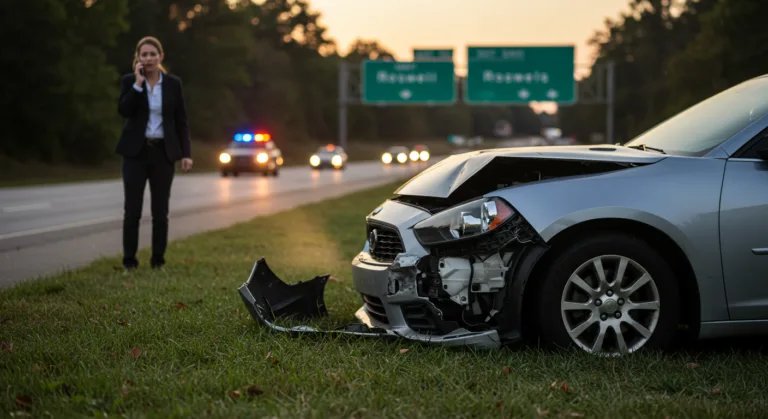
A new Pennsylvania Superior Court ruling is changing how insurance claims work after a Lyft driver Philadelphia collision, especially when the driver is off the clock. The decision nails down who pays for an accident when the driver isn’t actively working, which directly affects whose personal insurance gets the first call.
Key Takeaways
- Pennsylvania’s Act 164 of 2016 is the law here, and it sets different insurance minimums for Transportation Network Companies (TNCs) like Lyft based on the driver’s status.
- The recent Superior Court case, Doe v. XYZ Ride-Share Co. (2025), confirmed it: if a driver isn’t logged into the app, their personal car insurance is the primary policy to cover a crash.
- If you’re hit by a ride-share driver who’s off-duty, you need to call your own insurance company right away and talk to a lawyer to sort out the complicated liability.
- TNC drivers have to get that their personal insurance will likely reject a claim if they’re in an accident while logged in and waiting for a ride, which shows just how necessary TNC-specific policy endorsements are.
Pennsylvania’s Evolving TNC Insurance Framework
For years, Pennsylvania’s lawmakers have tried to get a handle on insurance for Transportation Network Companies (TNCs), walking a line between supporting new tech and protecting the public. The main law is still Act 164 of 2016, found at 75 Pa. C.S. § 5701 et seq., which lays out very specific insurance rules for TNCs by breaking a driver’s time into distinct phases.
You have to know these phases because they determine whose insurance company gets the bill. Phase 0 is simple: the driver’s off-duty and the app is off. Phase 1 starts the moment they log in and are waiting for a ping. Phase 2 covers the time after they’ve accepted a ride but before the passenger gets in. And Phase 3 is the ride itself, from pickup to drop-off. The TNC’s insurance is supposed to cover Phases 1, 2, and 3, but whether it’s primary or secondary depends on the phase and what the driver’s personal policy says.
The real mess starts when you try to figure out which policy pays first. For example, most personal auto policies have fine print saying they won’t cover any accident if the car is being used “for hire,” which is exactly what a TNC driver is doing. This built-in conflict has led to endless fights in court, with the driver’s personal insurer and the TNC’s insurer both trying to prove the other is on the hook for the claim.
The Superior Court’s Ruling: Doe v. XYZ Ride-Share Co. (2025)
The big news is the mid-2025 judgment from the Pennsylvania Superior Court in Doe v. XYZ Ride-Share Co., which finally drew a clear line for liability in an off-duty accident with a TNC driver. The case was pretty straightforward. A Lyft driver, Mr. Smith, got into a wreck on Broad Street in South Philadelphia. Critically, he wasn’t logged into the Lyft app. He was just running personal errands in his own car.
The Superior Court’s decision makes it official: in these situations, the driver’s personal automobile insurance policy is primary. It sounds simple, but the explosion of ride-share apps had made this a muddy legal question that needed a judge to settle it. The court looked at Act 164 and said there was no confusion about Phase 0 (when the app is off). The law was written to make TNCs pay for insurance when the driver is actively working on their platform. When they’re totally disconnected, their car is just a private car, and their personal insurance applies like it would for anyone else.
This ruling tells both accident victims and insurance adjusters exactly where to start. It confirms that while TNCs have their own rules, a driver using their car for personal trips is squarely covered by their own personal insurance contract. For anyone hit by an off-duty ride-share driver, that means your first call is to that driver’s personal insurance carrier.
Impact on Accident Victims in Philadelphia
If you’re hurt in a collision with a Lyft driver in Philadelphia, this new ruling gives you a clearer starting point, but it doesn’t make the insurance headaches disappear. When the driver was definitely off-duty with the app off, your claim should work like any other car accident claim against another person, you’ll be dealing with their personal insurance company.
The problem is, proving the driver’s status at the exact moment of the crash is tough. A driver might say they were off-duty to avoid getting dropped by their personal insurer, even if they were actually in Phase 1 (logged in, waiting for a ride). This is where Act 164’s details matter again. In Phase 1, the TNC’s policy is supposed to provide coverage, but often only if the driver’s personal policy denies the claim first, which it almost certainly will if the driver was logged in.
So, if you’re in a wreck like this, get all the info you can at the scene. You need the driver’s insurance, their contact info, and you should ask if they were logged into a TNC app. Their answer isn’t proof, but it’s a start. You also have to report the accident to your own insurance company right away so they can start their own investigation.
One thing is certain: don’t make any assumptions about who is going to pay. The lines between personal and commercial use are often blurry in these cases, and TNCs won’t just hand over driver activity data without a legal fight. This is why getting a lawyer involved early is smart. An attorney can issue a subpoena to get the TNC’s electronic records, the login times, GPS data, and trip logs, that will prove the driver’s real status. That proof is what determines which insurance policy has to cover your medical bills and lost wages.
Considerations for Lyft Drivers in Pennsylvania
For drivers, the message from the Doe v. XYZ Ride-Share Co. case is simple: when you’re off the app, you’re on your own dime. Your personal insurance is solely responsible for any accidents. It’s just a regular car accident claim, with no TNC involvement.
The real danger zone for drivers is still Phase 1: logged in, no passenger. Most personal auto policies include a “livery exclusion,” which is grounds for denying a claim if the driver was logged into an app like Lyft, even without a passenger. If your personal policy denies the claim, the TNC’s backup coverage is supposed to kick in, but that can take a long, expensive legal battle to sort out. It’s a huge financial risk.
Drivers need to get ahead of this by checking their personal auto policy right now. Many insurers now sell ride-share endorsements or special TNC policies that fill this exact coverage gap. For a relatively small cost, these endorsements cover you during Phase 1, creating a smooth handoff from your policy to the TNC’s policy once you accept a ride. Trying to save a few bucks by skipping this endorsement is a massive gamble against a life-altering accident claim.
On top of that, drivers should know what their TNC’s insurance policy actually covers. Act 164 just sets the minimums, and some TNCs might offer better coverage. Getting a copy of the TNC’s certificate of insurance and comparing it to your personal policy is just good business. How can you know if you’re protected if you don’t know what the policies say?
The Role of Personal Insurance: What to Expect
When an off-duty Lyft driver is in a wreck, the claim starts with their personal insurance carrier, but with extra steps. The adjuster will investigate the crash, but they’ll also be trying to confirm the driver was truly off-duty. This isn’t them being difficult (well, not just that), it’s them doing their job, and the new Superior Court ruling backs them up.
Your own insurance company will also be digging into the driver’s TNC status if you file a claim under your own Uninsured/Underinsured Motorist (UM/UIM) or medical coverage. They want to find the right primary insurer just as much as you do. If there’s any doubt about the driver’s status, expect your claim to get stuck in limbo while the insurance companies point fingers at each other. This is why having a clear police report and getting a lawyer to secure TNC data quickly can break the logjam.
Pennsylvania’s choice no-fault system adds another layer. Your own policy’s medical benefits will likely be the first to pay your hospital bills, no matter who was at fault. That makes it just as important to know your own coverage limits for medical bills and lost wages as it is to chase down the at-fault driver’s policy.
The insurance rules for TNCs are still being written in the courts and legislatures. The Doe v. XYZ Ride-Share Co. case cleared up the off-duty question, but the problems with Phase 1 coverage aren’t going away. Both victims and drivers need to stay on top of their insurance obligations. The best way to do that is to talk to a lawyer who actually handles these kinds of personal injury and insurance cases.
Conclusion
The bottom line from the Pennsylvania Superior Court’s 2025 ruling in Doe v. XYZ Ride-Share Co. is this: a Lyft driver’s personal insurance is on the hook for accidents that happen when they’re truly off-duty. For accident victims, this helps point them to the right insurance company. For drivers, it’s a stark reminder to get a ride-share endorsement to cover the dangerous gaps in their coverage, especially during Phase 1.
What does “off-duty” mean for a Lyft driver in Pennsylvania?
It means the driver is not logged into the Lyft app and isn’t available for ride requests. They’re simply using their vehicle for personal reasons, the same as any other private citizen.
If I’m hit by a Lyft driver in Philadelphia who claims to be off-duty, what should I do first?
Make sure you’re safe and get medical help if you need it. Then, collect the driver’s name, contact details, insurance information, and car details. Get info from any witnesses. Report the crash to your own insurance company right away, and you should probably call a personal injury attorney to figure out the driver’s true TNC status.
Does Lyft’s insurance ever cover an off-duty accident?
No. Under Pennsylvania’s Act 164 and the new court ruling, Lyft’s insurance is there for accidents that happen while a driver is logged in, waiting for a ride, or conducting a ride. Off-duty crashes are covered by the driver’s personal car insurance.
What is “Phase 1” coverage for Lyft drivers, and why is it important?
Phase 1 is when a driver is logged into the app and waiting for a ride request. It’s a critical period because personal auto policies often have “commercial use” exclusions that let them deny claims, so the TNC’s contingent policy or a driver’s ride-share endorsement is the only thing preventing a major coverage gap.
Should Lyft drivers in Pennsylvania get a special ride-share insurance endorsement?
Absolutely. Drivers in Pennsylvania are taking a huge risk without one. A ride-share endorsement is designed to fill the coverage gap during Phase 1 (logged in, waiting for a ride), ensuring they have continuous coverage and protecting them from having a claim denied by their personal insurer.