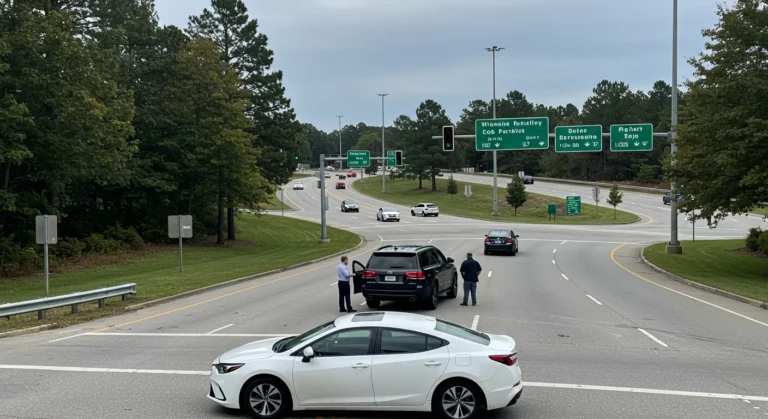
Filing a car accident claim in Sandy Springs, Georgia can feel overwhelming. Navigating insurance companies, medical bills, and potential legal battles can leave you feeling lost and vulnerable. Are you sure you know the critical steps to protect your rights and maximize your chances of a fair settlement?
Key Takeaways
- You have only two years from the date of the car accident to file a personal injury lawsuit in Georgia, as outlined by O.C.G.A. § 9-3-33.
- Gathering evidence like the police report (often available online a few days after the incident), witness statements, and medical records is crucial for building a strong claim.
- Georgia is an “at-fault” state, meaning the driver responsible for the accident is liable for damages, making it essential to prove negligence to recover compensation.
The aftermath of a car crash is a chaotic time. You’re likely dealing with injuries, vehicle damage, and the stress of figuring out what to do next. In Sandy Springs, like anywhere else in Georgia, knowing how to properly file a car accident claim is essential to protecting your rights and recovering the compensation you deserve. I’ve seen far too many people make critical errors in the initial stages that ultimately jeopardize their chances of a fair settlement.
What Went Wrong First: Common Mistakes to Avoid
Before we dive into the proper steps, let’s address what not to do. Too often, I see people make these mistakes, and they can be devastating to your claim:
- Admitting Fault: Even if you think you might be partially responsible, never admit fault at the scene or to the insurance company. Stick to the facts. Let the investigation determine liability.
- Delaying Medical Treatment: Many people try to “tough it out” after an accident. This is a huge mistake. Document your injuries immediately. Go to the emergency room at Northside Hospital or schedule an appointment with your doctor. Delaying treatment can make it harder to prove your injuries were caused by the accident.
- Giving a Recorded Statement Too Soon: The insurance adjuster will likely want to take a recorded statement. You are not obligated to give one immediately. In fact, it’s best to consult with an attorney first. They can help you prepare and ensure you don’t say anything that could be used against you.
- Accepting the First Offer: Insurance companies are in the business of making money. Their initial offer is almost always lower than what you’re entitled to. Don’t accept it without consulting with an attorney.
- Failing to Gather Evidence: Crucial evidence can disappear quickly. Take photos of the scene, vehicle damage, and your injuries. Get the names and contact information of any witnesses. Obtain a copy of the police report.
Step-by-Step Guide to Filing a Car Accident Claim in Sandy Springs
Now, let’s break down the steps you should take after a car accident in Sandy Springs:
Were you in a car accident?
Insurance adjusters are trained to settle fast and pay less. Most car accident victims leave an average of $32,000 on the table.
- Report the Accident: If there are injuries, death, or property damage exceeding $500, you are legally required to report the accident to the police. Call 911 immediately.
- Exchange Information: Exchange insurance information, driver’s license details, and contact information with the other driver(s).
- Gather Evidence at the Scene: If it is safe to do so, take photos and videos of the accident scene, including vehicle damage, skid marks, road conditions, and any visible injuries. Note the exact location (e.g., the intersection of Roswell Road and Abernathy Road).
- Seek Medical Attention: As I mentioned earlier, seek medical attention immediately, even if you don’t think you’re seriously injured. Some injuries, like whiplash, may not be immediately apparent. Document all medical treatment, including doctor visits, physical therapy, and medication.
- Obtain the Police Report: You can typically obtain a copy of the police report online or from the Sandy Springs Police Department records division a few days after the accident. This report will contain valuable information, including the officer’s opinion on who was at fault.
- Notify Your Insurance Company: Notify your own insurance company about the accident. This is important, even if you weren’t at fault. Your insurance company may be able to help with medical payments or property damage, regardless of fault.
- Consult with a Car Accident Attorney: Before speaking with the other driver’s insurance company, consult with a car accident attorney in Sandy Springs. An attorney can advise you on your rights, help you gather evidence, and negotiate with the insurance company on your behalf.
- Document Everything: Keep a detailed record of all expenses related to the accident, including medical bills, lost wages, and property damage. Also, document all communications with the insurance company.
- File a Claim with the At-Fault Driver’s Insurance Company: Your attorney can help you file a claim with the at-fault driver’s insurance company. This claim should include a demand for compensation for your injuries, medical expenses, lost wages, and property damage.
- Negotiate a Settlement: The insurance company will likely make a settlement offer. Your attorney can help you negotiate a fair settlement. If the insurance company refuses to offer a fair settlement, your attorney can file a lawsuit on your behalf.
- File a Lawsuit (If Necessary): In Georgia, the statute of limitations for personal injury cases is two years from the date of the accident, according to O.C.G.A. § 9-3-33. If you cannot reach a settlement with the insurance company, you must file a lawsuit before the statute of limitations expires.
Understanding Georgia’s “At-Fault” System
Georgia is an “at-fault” state. This means that the driver who caused the accident is responsible for paying for the damages. To recover compensation, you must prove that the other driver was negligent. Negligence can be established by showing that the other driver violated a traffic law, was distracted while driving, or was driving under the influence of alcohol or drugs. If you’re in Augusta, it’s important to know how to prove fault in these situations.
Proving Negligence: Key Evidence to Gather
Building a strong case requires solid evidence. Here’s what you’ll need:
- Police Report: The police report is a crucial piece of evidence. It will contain the officer’s findings on who was at fault, as well as witness statements and other relevant information.
- Witness Statements: If there were any witnesses to the accident, obtain their contact information and ask them to provide a statement.
- Photos and Videos: Photos and videos of the accident scene, vehicle damage, and your injuries can be powerful evidence.
- Medical Records: Your medical records will document the extent of your injuries and the medical treatment you received.
- Expert Testimony: In some cases, you may need to hire an expert witness, such as an accident reconstructionist, to help prove negligence.
Case Study: From Zero to Settlement in Six Months
I had a client last year, Sarah, who was rear-ended on GA-400 near the I-285 interchange. The other driver was clearly at fault, but the insurance company initially offered a ridiculously low settlement. Sarah had significant whiplash and had to miss work. We gathered all the evidence: the police report, Sarah’s medical records, and a statement from Sarah’s physical therapist detailing the severity of her injury. We then sent a detailed demand letter to the insurance company, outlining Sarah’s damages and providing supporting documentation. After several rounds of negotiations, we were able to secure a settlement of $75,000 for Sarah within six months. This covered her medical expenses, lost wages, and pain and suffering. Without proper documentation and a skilled negotiator, Sarah would have been stuck with a fraction of what she deserved.
Here’s what nobody tells you: insurance companies are NOT your friend. They are looking out for their bottom line. Don’t let them take advantage of you. It’s important to remember that winning against insurance requires preparation.
Navigating Common Insurance Company Tactics
Insurance companies often employ tactics to minimize payouts. Be aware of these common strategies:
- Delaying Claims: They may delay processing your claim in the hope that you’ll become desperate and accept a low offer.
- Denying Claims: They may deny your claim outright, claiming that you were at fault or that your injuries are not as severe as you claim.
- Offering Low Settlements: As mentioned before, they will often offer a low settlement in the hope that you’ll accept it without consulting with an attorney.
- Requesting Unnecessary Information: They may request unnecessary information in an attempt to overwhelm you and discourage you from pursuing your claim.
The Role of a Car Accident Attorney in Sandy Springs
A car accident attorney can be your advocate throughout the claims process. They can:
- Investigate the accident and gather evidence.
- Negotiate with the insurance company on your behalf.
- File a lawsuit if necessary.
- Represent you in court.
Having experienced legal representation levels the playing field and significantly increases your chances of obtaining a fair settlement. If you’re in Marietta, choosing the right lawyer can make all the difference.
Measurable Results: The Value of Legal Representation
Studies have consistently shown that individuals who hire an attorney after a car accident receive significantly higher settlements than those who do not. A report by the Insurance Research Council (IRC) found that settlements were 40% higher when an attorney was involved. While every case is different, and there are no guarantees, the data clearly demonstrates the value of legal representation.
What if you were injured as a passenger in a vehicle involved in a car accident? The process is similar but requires careful consideration of the driver’s insurance policy and potential claims against both drivers involved. It’s crucial to know if you are really okay after the accident.
Filing a car accident claim in Sandy Springs doesn’t have to be a daunting task. By following these steps, understanding your rights, and seeking legal representation when necessary, you can increase your chances of a successful outcome. Don’t go it alone – protect yourself. Consult with a qualified attorney as soon as possible.
How long do I have to file a car accident claim in Georgia?
The statute of limitations for personal injury cases in Georgia is two years from the date of the accident, as specified in O.C.G.A. § 9-3-33. If you don’t file a lawsuit within that time, you lose your right to sue.
What if the other driver doesn’t have insurance?
If the other driver is uninsured, you may be able to recover compensation through your own uninsured motorist (UM) coverage. UM coverage protects you if you’re injured by an uninsured driver.
What if I was partially at fault for the accident?
Georgia follows a modified comparative negligence rule. This means that you can still recover compensation even if you were partially at fault, as long as your percentage of fault is less than 50%. However, your compensation will be reduced by your percentage of fault. For example, if you were 20% at fault, you would only be able to recover 80% of your damages.
What types of damages can I recover in a car accident claim?
You can recover various types of damages, including medical expenses, lost wages, property damage, pain and suffering, and future medical expenses.
How much does it cost to hire a car accident attorney?
Most car accident attorneys work on a contingency fee basis. This means that you don’t pay any attorney fees unless they recover compensation for you. The attorney’s fee is typically a percentage of the settlement or court award.
Don’t let the insurance company dictate your future. Take control of your claim by consulting with an attorney immediately after a car accident in Sandy Springs. It’s the single best thing you can do to protect your rights and maximize your recovery.